
What does MOUSE mean?
Definitions for MOUSE
maʊs; maʊz; maɪsmouse
This dictionary definitions page includes all the possible meanings, example usage and translations of the word MOUSE.
Princeton's WordNet
mousenoun
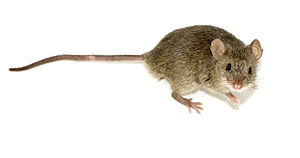
any of numerous small rodents typically resembling diminutive rats having pointed snouts and small ears on elongated bodies with slender usually hairless tails
shiner, black eye, mousenoun
a swollen bruise caused by a blow to the eye
mousenoun
person who is quiet or timid
mouse, computer mouseverb
a hand-operated electronic device that controls the coordinates of a cursor on your computer screen as you move it around on a pad; on the bottom of the device is a ball that rolls on the surface of the pad
"a mouse takes much more room than a trackball"
sneak, mouse, creep, pussyfootverb
to go stealthily or furtively
"..stead of sneaking around spying on the neighbor's house"
mouseverb
manipulate the mouse of a computer
Wiktionary
mousenoun
Any small rodent of the genus Mus
mousenoun
A member of the many small rodent and marsupial species resembling such a rodent.
mousenoun
A quiet or shy person.
mousenoun
(plural mice or, rarely, mouses) An input device that is moved over a pad or other flat surface to produce a corresponding movement of a pointer on a graphical display.
mousenoun
hematoma
mouseverb
To move cautiously or furtively, in the manner of a mouse (the rodent) (frequently used in the phrasal verb to mouse around).
mouseverb
To hunt or catch mice (the rodents), usually of cats.
mouseverb
To close the mouth of a hook by a careful binding of marline or wire.
Captain Higgins moused the hook with a bit of marline to prevent the block beckets from falling out under slack.
mouseverb
To navigate by means of a computer mouse.
Etymology: From mous, from mus, from mūs, from muh₂s.
Samuel Johnson's Dictionary
Mousenoun
plural mice. The smallest of all beasts; a little animal haunting houses and corn fields, destroyed by cats.
Etymology: mus , Saxon; mus, Latin.
The eagle England being in prey,
To her unguarded nest the weazel Scot
Comes sneaking, and so sucks her princely eggs;
Playing the mouse in absence of the cat. William Shakespeare.These shall be unclean; the weasle, the mouse, and the tortoise. Lev. xi. 29.
Where mice and rats devour’d poetick bread,
And with heroick verse luxuriously were fed. Dryden.This structure of hair I have observed in the hair of cats, rats, and mice. William Derham, Physico-Theol.
To Mouseverb
Etymology: from the noun.
An eagle tow’ring, in his pride of place
Was by a mousing owl hawk’d and kill’d. William Shakespeare.A whole assembly of mousing saints, under the mask of zeal and good nature, lay many kingdoms in blood. Roger L'Estrange.
Wikipedia
Mouse
A mouse, plural mice, is a small rodent characteristically having a pointed snout, small rounded ears, a body-length scaly tail, and a high breeding rate. The best known mouse species is the common house mouse (Mus musculus). It is also a popular pet. In some places, certain kinds of field mice are locally common. They are known to invade homes for food and shelter. Species of mice are mostly classified in Rodentia, and are present throughout the order. Typical mice are classified in the genus Mus. Mice are typically distinguished from rats by their size. Generally, when someone discovers a smaller muroid rodent, its common name includes the term mouse, while if it is larger, the name includes the term rat. Common terms rat and mouse are not taxonomically specific. Scientifically, the term mouse is not confined to members of Mus for example, but also applies to species from other genera such as the deer mouse, Peromyscus. Domestic mice sold as pets often differ substantially in size from the common house mouse. This is attributable both to breeding and to different conditions in the wild. The best-known strain, the white lab mouse, has more uniform traits that are appropriate to its use in research. Cats, wild dogs, foxes, birds of prey, snakes and even certain kinds of arthropods have been known to prey heavily upon mice. Nevertheless, because of its remarkable adaptability to almost any environment, the mouse is one of the most successful mammalian genera living on Earth today. Mice, in certain contexts, can be considered vermin which are a major source of crop damage, causing structural damage and spreading diseases through their parasites and feces. In North America, breathing dust that has come in contact with mouse excrement has been linked to hantavirus, which may lead to hantavirus pulmonary syndrome (HPS). Primarily nocturnal animals, mice compensate for their poor eyesight with a keen sense of hearing, and rely especially on their sense of smell to locate food and avoid predators.Mice build long intricate burrows in the wild. These typically have long entrances and are equipped with escape tunnels or routes. In at least one species, the architectural design of a burrow is a genetic trait.
ChatGPT
mouse
A mouse is a small rodent commonly found worldwide, characterized by a pointed snout, small rounded ears, and a long naked or almost hairless tail. In computing, a mouse is also a handheld device that a person uses to move a cursor around on a computer screen and to select and manipulate items on the screen.
Webster Dictionary
Mousenoun
any one of numerous species of small rodents belonging to the genus Mus and various related genera of the family Muridae. The common house mouse (Mus musculus) is found in nearly all countries. The American white-footed, or deer, mouse (Hesperomys leucopus) sometimes lives in houses. See Dormouse, Meadow mouse, under Meadow, and Harvest mouse, under Harvest
Mousenoun
a knob made on a rope with spun yarn or parceling to prevent a running eye from slipping
Mousenoun
same as 2d Mousing, 2
Mousenoun
a familiar term of endearment
Mousenoun
a dark-colored swelling caused by a blow
Mousenoun
a match used in firing guns or blasting
Mouseverb
to watch for and catch mice
Mouseverb
to watch for or pursue anything in a sly manner; to pry about, on the lookout for something
Mouseverb
to tear, as a cat devours a mouse
Mouseverb
to furnish with a mouse; to secure by means of a mousing. See Mouse, n., 2
Etymology: [OE. mous, mus, AS. ms, pl. ms; akin to D. muis, G. maus, OHG. & Icel. ms, Dan. muus, Sw. mus, Russ. muishe, L. mus, Gr. my^s, Skr. msh mouse, mush to steal. 277. Cf. Muscle, Musk.]
Wikidata
Mouse
In computing, a mouse is a pointing device that functions by detecting two-dimensional motion relative to its supporting surface. Physically, a mouse consists of an object held under one of the user's hands, with one or more buttons. The mouse sometimes features other elements, such as "wheels", which allow the user to perform various system-dependent operations, or extra buttons or features that can add more control or dimensional input. The mouse's motion typically translates into the motion of a pointer on a display, which allows for fine control of a graphical user interface.
Chambers 20th Century Dictionary
Mouse
mows, n. a little rodent animal found in houses and in the fields:—pl. Mice (mīs): one of various animals like the mouse, the flitter-mouse, shrew-mouse: part of a hind-leg of beef, next the round—also Mouse′-butt′ock and Mouse′-piece: a match for firing a cannon or mine: a small cushion for a woman's hair: (slang) a black eye, or discoloured swelling: a term of endearment.—v.t. and v.i. (mowz), to hunt for mice: to pursue slyly: to prowl: to tear as a cat tears a mouse: (naut.) to pass a turn or two of rope yarn round the point of a tackle-hook to prevent its unhooking.—ns. Mouse′-ear, a name of several plants with soft leaves shaped like a mouse's ear; Mouse′-hole, a hole for mice: a small hole or opening; Mouse′-hunt (Shak.), a mouser; Mouse′kin, Mous′ie, a young mouse; Mous′er, a catcher of mice; Mous′ery, a resort of mice; Mouse′-sight, myopia; Mouse′tail, a small plant with a spike of seed-vessels very like the tail of a mouse; Mouse′-trap, a trap for catching mice; Mous′ing, act of catching mice.—adj. given to catching mice.—adj. Mous′y, like a mouse in colour or smell: abounding with mice. [A.S. mús, pl. mýs; Ger. maus, L. and Gr. mus.]
The Foolish Dictionary, by Gideon Wurdz
MOUSE
The frequent cause of a rise in cotton. All gone to 6's and 7's--Ladies' Footwear in Chicago. N Time and tide wait for no man--But time always stands still for a woman of thirty. NATURE The author of "The Seasons," an interesting work over which Spring pours, Summer smiles, and Autumn turns the leaves while Winter catches the drift of it all.
Dictionary of Nautical Terms
mouse
A kind of ball or knob, wrought on the collars of stays by means of spun-yarn, higher parcelling, &c. The mouse prevents the running eye from slipping. (See PUDDENING.) Also, a match used in firing a mine. Also, a mark made upon braces and other ropes, to show their squaring or tallying home.--To mouse a hook, to put a turn or two of rope-yarn round the point of a tackle-hook and its neck to prevent its unhooking.--To raise a mouse, to strike a blow which produces a lump.
Editors Contribution
mouse
A type of electronic device and product created and designed in various colors, materials, mechanisms, shapes, sizes and styles.
A computer mouse comes in many forms, some you connect with a cable to a computer, some are wireless, some they function by moving, others you move via a ball on a support.
Submitted by MaryC on February 10, 2017
Suggested Resources
mouse
Song lyrics by mouse -- Explore a large variety of song lyrics performed by mouse on the Lyrics.com website.
Surnames Frequency by Census Records
MOUSE
According to the U.S. Census Bureau, Mouse is ranked #38948 in terms of the most common surnames in America.
The Mouse surname appeared 566 times in the 2010 census and if you were to sample 100,000 people in the United States, approximately 0 would have the surname Mouse.
54.2% or 307 total occurrences were White.
31.9% or 181 total occurrences were American Indian or Alaskan Native.
5.3% or 30 total occurrences were Black.
4.9% or 28 total occurrences were of Hispanic origin.
Matched Categories
British National Corpus
Written Corpus Frequency
Rank popularity for the word 'MOUSE' in Written Corpus Frequency: #3451
Nouns Frequency
Rank popularity for the word 'MOUSE' in Nouns Frequency: #1459
Anagrams for MOUSE »
moues
Numerology
Chaldean Numerology
The numerical value of MOUSE in Chaldean Numerology is: 7
Pythagorean Numerology
The numerical value of MOUSE in Pythagorean Numerology is: 1
Examples of MOUSE in a Sentence
The problem with standing [at work] is that when you raise desk height for keyboard/mouse use, you need to also raise screen height about the desk or you get neck flexion, neck flexion.
We said we are going to come up with something that's going to eat up all the other mice out there, so we called our first mouse the Razer Boomslang, after the African tree snake.
Two weeks after his 4th birthday, literally sitting next to Mickey Mouse, he was getting an IV infusion of strong chemotherapy.
It's a constant game of cat-and-mouse, we're already seeing copycat groups pushing out similar messages. As long as people are falling for these scams, they're going to continue.
It's going to be a game of cat and mouse.
Popularity rank by frequency of use
References
Translations for MOUSE
From our Multilingual Translation Dictionary
- аҳәынаҧAbkhaz
- muisAfrikaans
- አይጥAmharic
- zorzAragonese
- فأرة, فأرArabic
- নিগনিAssamese
- гӏункӏкӏAvaric
- achakuAymara
- siçanAzerbaijani
- сысҡанBashkir
- мыш, мышкаBelarusian
- ми́шкаBulgarian
- মাউস, ইঁদুরBengali
- logodennBreton
- ratolíCatalan, Valencian
- myš, myšák, myškaCzech
- шӑшиChuvash
- llygod, llygodenWelsh
- musDanish
- Maus, Mäuserich, Mäusin, Mäuseweibchen, Mäusemännchen, Mäusejunges, Mäusebaby, mausen, Mäuse fangenGerman
- މީދާDivehi
- afiEwe
- ποντίκι, ποντικόςGreek
- muso, musido, virmuso, musino, virmusido, musidinoEsperanto
- ratón, mouseSpanish
- hiirEstonian
- saguBasque
- مشک, موس, موش, ترسو, موشوارهPersian
- hiiri, hiirulainen, hiirestää, [[pyydystää]] [[hiiriä]], hiiviskellä, hiippaillaFinnish
- músFaroese
- sourisFrench
- mûsWestern Frisian
- luch, luchógIrish
- coinean, luchScottish Gaelic
- ratoGalician
- ઉંદરGujarati
- lughManx
- ɓeraHausa
- עכברHebrew
- चूहा, माउसHindi
- egérHungarian
- մկնիկ, մուկArmenian
- musInterlingua
- mouse komputer, tikus, mouseIndonesian
- musaInterlingue
- ọkeIgbo
- musino, musyuno, musyunino, muso, musulo, musyunuloIdo
- tölvumús, músIcelandic
- topo, mouse, sorcioItalian
- 鼠, ネズミ, マウス, ハツカネズミJapanese
- თაგვიGeorgian
- тышқан, тінтуірKazakh
- teriaqKalaallisut, Greenlandic
- កូនកណ្ដុរ, កណ្ដុរស្រូវKhmer
- ಇಲಿKannada
- 마우스, 쥐, 생쥐Korean
- mişk, مشکKurdish
- чычканKyrgyz
- mūsLatin
- Maus, mausenLuxembourgish, Letzeburgesch
- emmeseGanda
- ໜູLao
- pelė, pelėnasLithuanian
- peleLatvian
- kioreMāori
- глувче, глушецMacedonian
- ചുണ്ടെലിMalayalam
- хулгана, оготноMongolian
- उंन्दिरMarathi
- tikus, mencit, tetikusMalay
- ġurdien, mawsMaltese
- ကြွက်Burmese
- मुसोNepali
- muis, computermuis, muisje, muizen, muizen vangenDutch
- mus, datamusNorwegian
- naʼatsʼǫǫsíNavajo, Navaho
- mbewaChichewa, Chewa, Nyanja
- ratuga, mirga, furetaOccitan
- ମୂଷାOriya
- мыстOssetian, Ossetic
- ਚੂਹਾPanjabi, Punjabi
- myszka, myszPolish
- مږکPashto, Pushto
- rato, camundongo, mousePortuguese
- mieurRomansh
- im-bebaKirundi
- șoricel, șoarece, mausRomanian
- мы́шка, мышь, ловить мышейRussian
- umushushwe, imbebaKinyarwanda
- मूषःSanskrit
- topi, topeSardinian
- ڪوئوSindhi
- миш, mišSerbo-Croatian
- මීයාSinhala, Sinhalese
- myšSlovak
- miš, miškaSlovene
- jiirSomali
- miAlbanian
- twebaSouthern Sotho
- mus, datormusSwedish
- kipanyaSwahili
- சுண்டெலிTamil
- ఎలుకTelugu
- мушTajik
- หนูThai
- syçanTurkmen
- dagaTagalog
- fare, sıçanTurkish
- тычканTatar
- مائۇسUyghur, Uighur
- ми́ша, ми́шкаUkrainian
- چوهاUrdu
- sichqonUzbek
- chuộtVietnamese
- himugül, jimugül, himug, mugül, mugaparat, mug, jimug, mugönVolapük
- soriWalloon
- janaxWolof
- ilifuXhosa
- מױזYiddish
- èkúté, eliriYoruba
- 鼠标Chinese
- igundaneZulu
Get even more translations for MOUSE »
Translation
Find a translation for the MOUSE definition in other languages:
Select another language:
- - Select -
- 简体中文 (Chinese - Simplified)
- 繁體中文 (Chinese - Traditional)
- Español (Spanish)
- Esperanto (Esperanto)
- 日本語 (Japanese)
- Português (Portuguese)
- Deutsch (German)
- العربية (Arabic)
- Français (French)
- Русский (Russian)
- ಕನ್ನಡ (Kannada)
- 한국어 (Korean)
- עברית (Hebrew)
- Gaeilge (Irish)
- Українська (Ukrainian)
- اردو (Urdu)
- Magyar (Hungarian)
- मानक हिन्दी (Hindi)
- Indonesia (Indonesian)
- Italiano (Italian)
- தமிழ் (Tamil)
- Türkçe (Turkish)
- తెలుగు (Telugu)
- ภาษาไทย (Thai)
- Tiếng Việt (Vietnamese)
- Čeština (Czech)
- Polski (Polish)
- Bahasa Indonesia (Indonesian)
- Românește (Romanian)
- Nederlands (Dutch)
- Ελληνικά (Greek)
- Latinum (Latin)
- Svenska (Swedish)
- Dansk (Danish)
- Suomi (Finnish)
- فارسی (Persian)
- ייִדיש (Yiddish)
- հայերեն (Armenian)
- Norsk (Norwegian)
- English (English)
Word of the Day
Would you like us to send you a FREE new word definition delivered to your inbox daily?
Citation
Use the citation below to add this definition to your bibliography:
Style:MLAChicagoAPA
"MOUSE." Definitions.net. STANDS4 LLC, 2024. Web. 26 Apr. 2024. <https://www.definitions.net/definition/MOUSE>.


Discuss these MOUSE definitions with the community:
Report Comment
We're doing our best to make sure our content is useful, accurate and safe.
If by any chance you spot an inappropriate comment while navigating through our website please use this form to let us know, and we'll take care of it shortly.
Attachment
You need to be logged in to favorite.
Log In